
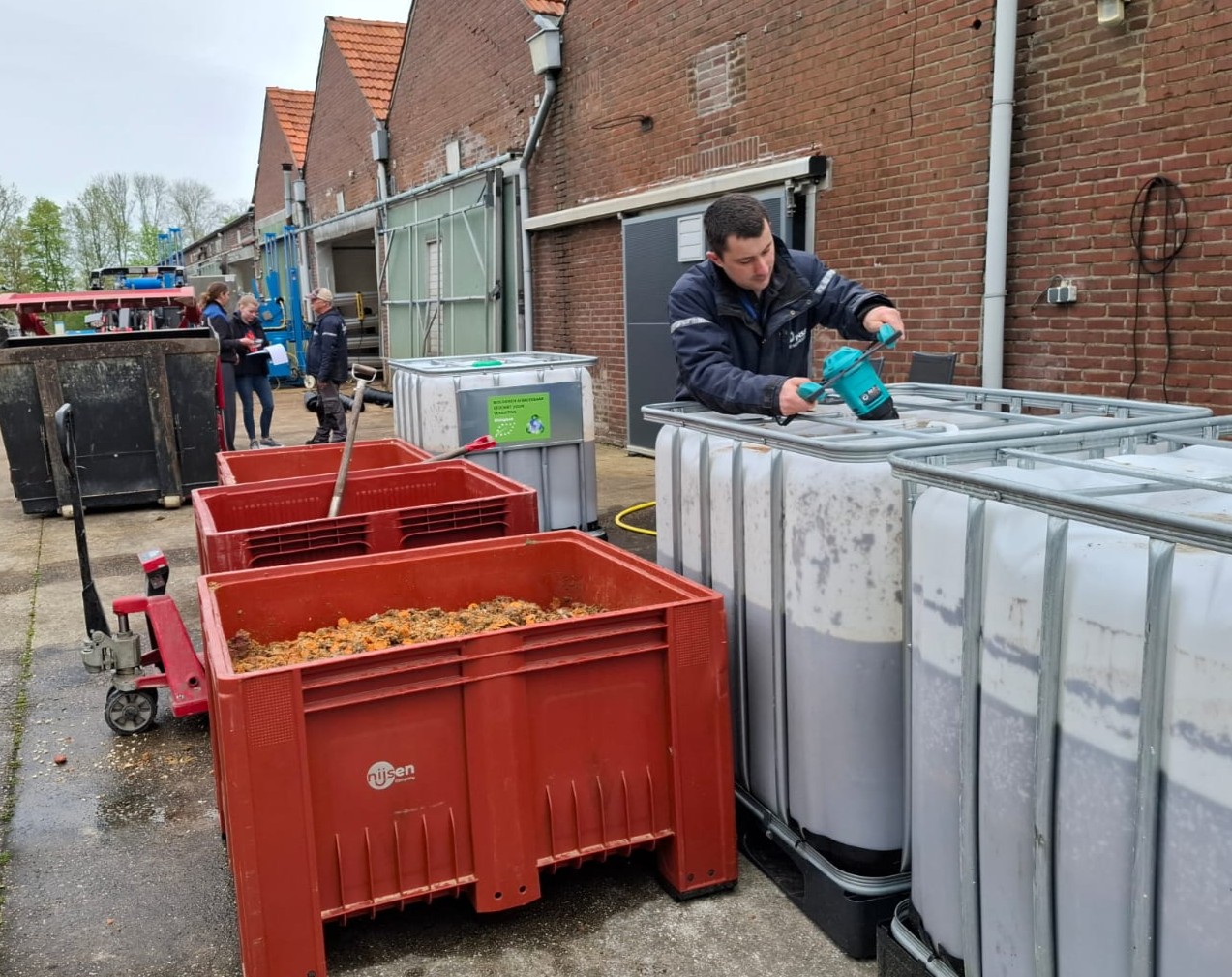
Within the IPPEC project, the utilization of organic waste streams as raw materials for insect breeding plays a central role. Black soldier fly larvae are known for their ability to convert various waste streams into valuable nutrients. In practice, however, it appears that not every waste stream is automatically suitable for large-scale application.
During the rearing trial, various residual streams were tested as substrates for the larvae. It became clear that, in addition to nutritional composition, factors such as availability, structure, and moisture content are decisive for the success of the breeding. For instance, the moisture content of several substrates proved to be lower than desired during the trial, which affects larval growth. Logistical aspects, such as the availability of residual streams in sufficient volumes, also proved to play an important role in the practical implementation.
These experiences show that successful insect farming begins with the careful selection and preparation of residual streams. Not only the theoretical nutritional value, but above all the processability and stability within the production process determine whether a residual stream can actually contribute to efficient protein production. A reliable supplier is at least as important as accurate calculations.
The insights gained help to design future trials more specifically. In the next article, we look ahead to what these results mean for the further scaling up of insect protein production within IPPEC.

