
Building the Future of Insect Protein
IPPEC develops living labs, an international learning community, and innovative applications for insect farming. By connecting knowledge, practice, and collaboration, we accelerate the global protein transition.
What we do
Based in the Peel region of the Netherlands, the Insect Protein Production Expertise Center (IPPEC) unites companies, researchers, education, and government to accelerate the global protein transition.
The Insect Protein Production Expertise Center (IPPEC) is dedicated to advancing sustainable insect protein production. We do this not only in the lab but also in an international context where businesses, researchers, educators, and governments work together. Our goal is to connect knowledge, innovation, and practical experience to ensure that insect farming becomes a solid pillar in the circular protein transition.

Living Lab & Research Platform
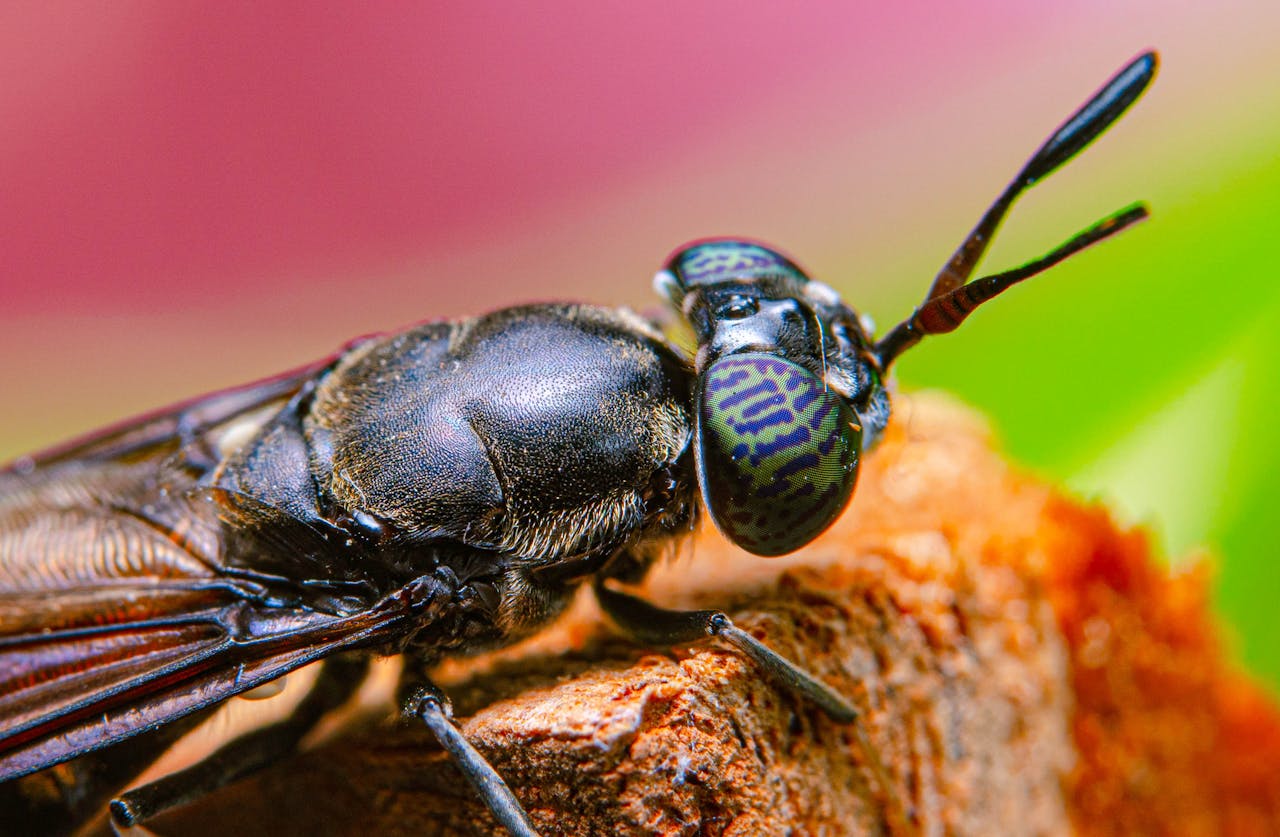
At IPPEC’s living labs, the focus lies on developing and testing practical best practices. We work with three key insect species: the black soldier fly (BSF), mealworms, and crickets. Each has its own strengths and applications, ranging from animal feed to human nutrition and biobased solutions. By feeding them with locally available organic by-products, we valorize resources that would otherwise be lost and take a step toward circular food systems.
Beyond the biological and farming aspects, technology plays a central role. We explore digital twin models to simulate production scenarios, develop advanced climate systems that optimize rearing conditions while reducing energy use, and invest in automation to address labor costs and improve efficiency—both critical factors for scaling up.
The expected results of this work package are concrete, transferable methods that companies worldwide can apply to improve their own production. This makes the living lab a direct response to the global demand for scalable, reliable, and sustainable insect farming processes. The impact is significant: from lowering CO₂ emissions and maximizing the use of organic by-products, to accelerating market access for insect protein products. In this way, IPPEC becomes both a source of knowledge and a catalyst for international innovation.

Insect learning community
One of IPPEC’s core missions is to build an insect learning community. This community is designed not only to gather knowledge and experience, but to actively circulate them among all stakeholders: entrepreneurs, researchers, students, and policymakers. In doing so, it creates an international network where learning, collaboration, and innovation go hand in hand.
The community takes shape through physical encounters—such as workshops, masterclasses, and networking events—as well as digital platforms where participants can access and exchange information. It is explicitly not limited to theoretical knowledge: we bring people together around concrete challenges and real-world case studies. This makes the community a dynamic environment where partners inspire each other, test best practices, and learn from both successes and failures.
The expected results are a more connected sector and a faster learning curve for everyone involved in insect farming and processing. By making knowledge-sharing accessible, the community prevents the repetition of mistakes and shortens the path to innovation. The impact goes beyond IPPEC’s direct partners: the learning community has the potential to become an international benchmark for how the insect sector collaborates, secures, and disseminates knowledge. In doing so, it makes an essential contribution to accelerating the global protein transition.

Innovation & development
In addition to researching and sharing knowledge, IPPEC actively stimulates the development of new applications, processes, and business models. Insects offer far more than just protein: they are part of a broader bio-based economy where side streams are transformed into valuable resources. Think of fats, chitin, or frass (insect manure), which can be used in animal feed, human food, bioplastics, or as soil improvers.
Our focus extends across the entire value chain: from the way side streams are collected and processed, to the development of end products that meet real market needs. We collaborate with entrepreneurs who want to launch new concepts and with researchers who validate innovative techniques. In this way, innovation is not a stand-alone experiment, but an integral part of sector-wide development.
The expected results are concrete: new product–market combinations, more efficient use of side streams, and a stronger foundation for profitable business models. The impact is significant. By linking innovation and development directly to practice, IPPEC contributes to circular agriculture and a resilient, sustainable protein supply that can be applied worldwide. This positions IPPEC not only as a source of knowledge, but also as a driver of tangible change in tomorrow’s food and agricultural systems.